


Image: lilgrapher / Shutterstock.com
This "I am not a robot" thing has been annoying for a long time—and not just for bots.
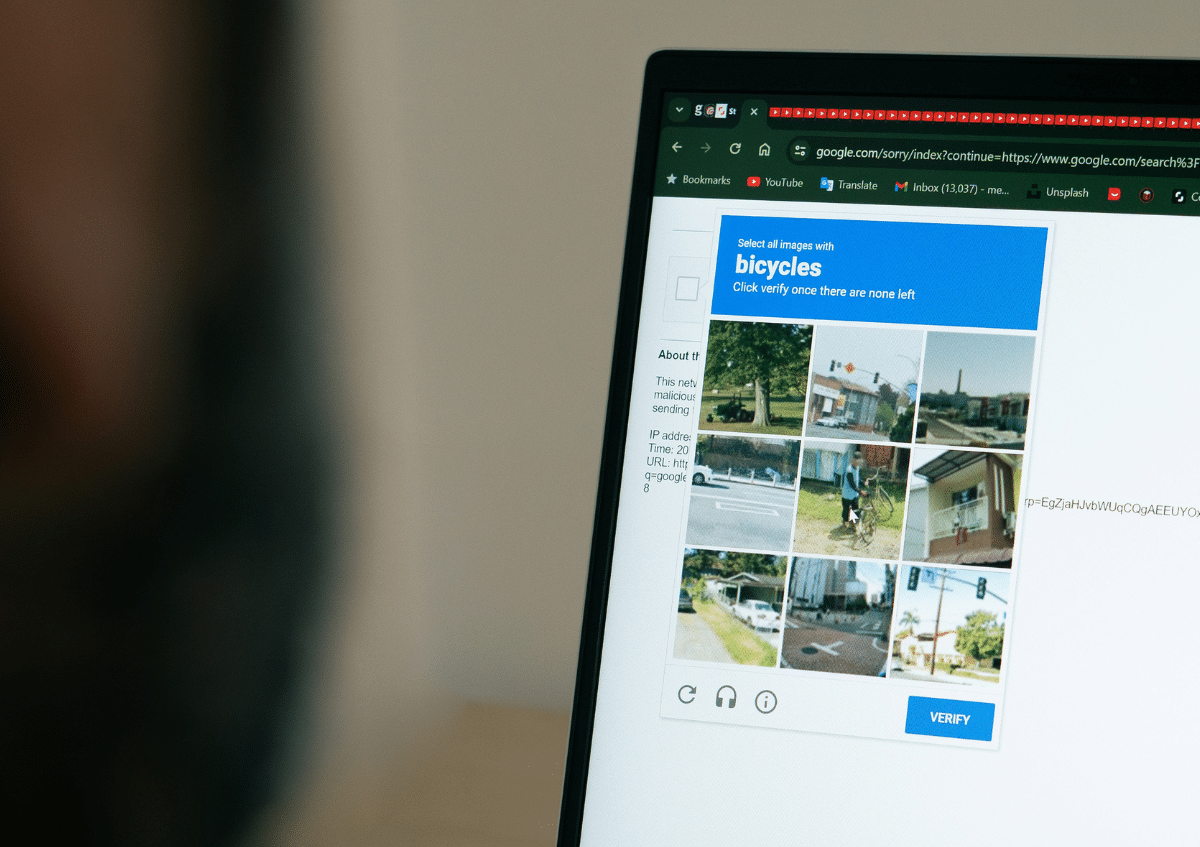
You know reCAPTCHA: sometimes you click on buses, sometimes everything happens invisibly in the background. For websites, it's a practical gatekeeper against spam. For data protection, however, for years it was more like, "Yes... you can do that... but please don't talk about it too loudly."
The reason is simple: reCAPTCHA protects against bots, but it also collects information to determine whether you are human. And until now, it often seemed as if Google had quite a lot of freedom in this regard: Google determines how such data is used and refers to its general data protection rules. It is precisely this combination that has caused headaches for many operators in Europe.
The big switch on April 2, 2026
As reported by heise online , Google has now announced a clear break: reCAPTCHA will be converted worldwide from April 2, 2026. The service will then no longer run according to Google's own rules, but as a classic service operating on behalf of the website operator.
In everyday language: The website explains what reCAPTCHA is used for—Google implements it. This shifts more responsibility (and control) to the operators.
What is changing at its core: less of a "profiling feeling"
One of the main criticisms from data protection advocates has always been that users are unaware of what is happening in the background—and that data from such security checks could ultimately end up in large data pools. Whether this was the case in every instance is not even the point. The mere suspicion is enough to make companies nervous.
The new model aims to draw a clear line here: data from reCAPTCHA should only be used for the operation, maintenance, and security of reCAPTCHA. Not "and maybe for this and that."
This is important for operators because it simplifies the argument: "We need this so that our site isn't spammed." And not: "We need this, but there's a whole Google trailer attached to it."
What users are likely to see: fewer Google links in the widget
Almost everyone who has ever filled out a form is familiar with this small reCAPTCHA badge with links to Google's privacy policy and terms of use. According to the announcement, these notices will disappear from the effective date because users will no longer automatically be "slid into" Google's general terms and conditions.
Google is also asking operators to remove their own manually added references to Google's privacy policy regarding reCAPTCHA so that it fits with the new logic. This is a pretty clear sign that Google wants to change not only the paperwork, but also its public image.
Technically, the whole thing should run smoothly: no interruptions, existing keys should continue to work, and protective functions should remain as they are. For many companies, this is crucial: it is easier to pull a legal lever than to rebuild thousands of forms and integrations.
Why this is happening now: AI makes bots better – and Europe is becoming stricter
AI does not make bots less harmful, but smarter. At the same time, regulation in Europe is not becoming more lax, but stricter. reCAPTCHA sits right between these two worlds: security on the one hand, data protection on the other. If Google reCAPTCHA is redesigned "as requested," the product will remain attractive to companies—without every use feeling like a legal tightrope walk.
The critical commentary at the end
It all sounds like progress—but we shouldn't forget that Google rarely takes such steps out of pure philanthropy. It's also a clever move to ensure that reCAPTCHA doesn't become a problem in Europe at some point that has to be eliminated everywhere.
And another thing: even if the model is now cleaner, the fundamental question remains: is it really necessary to incorporate a heavy Google tool into every form? Many sites use reCAPTCHA not "because it is absolutely necessary," but because it is convenient. Data protection is improved not only by better contracts, but above all by less data collection overall. If operators learn from this and opt for leaner solutions more often, that would be the real gain.
Source: heise.de