
Image: Below the Sky / Shutterstock.com
One Harry Potter, please—almost the entire book to take away
Artificial intelligence amazes us with new capabilities almost every day. But what a team of researchers from Stanford and Yale has now discovered is giving even tech fans pause for thought: some AI language models can output entire novels – almost word for word as they were written. And this despite the fact that these books are protected by copyright.
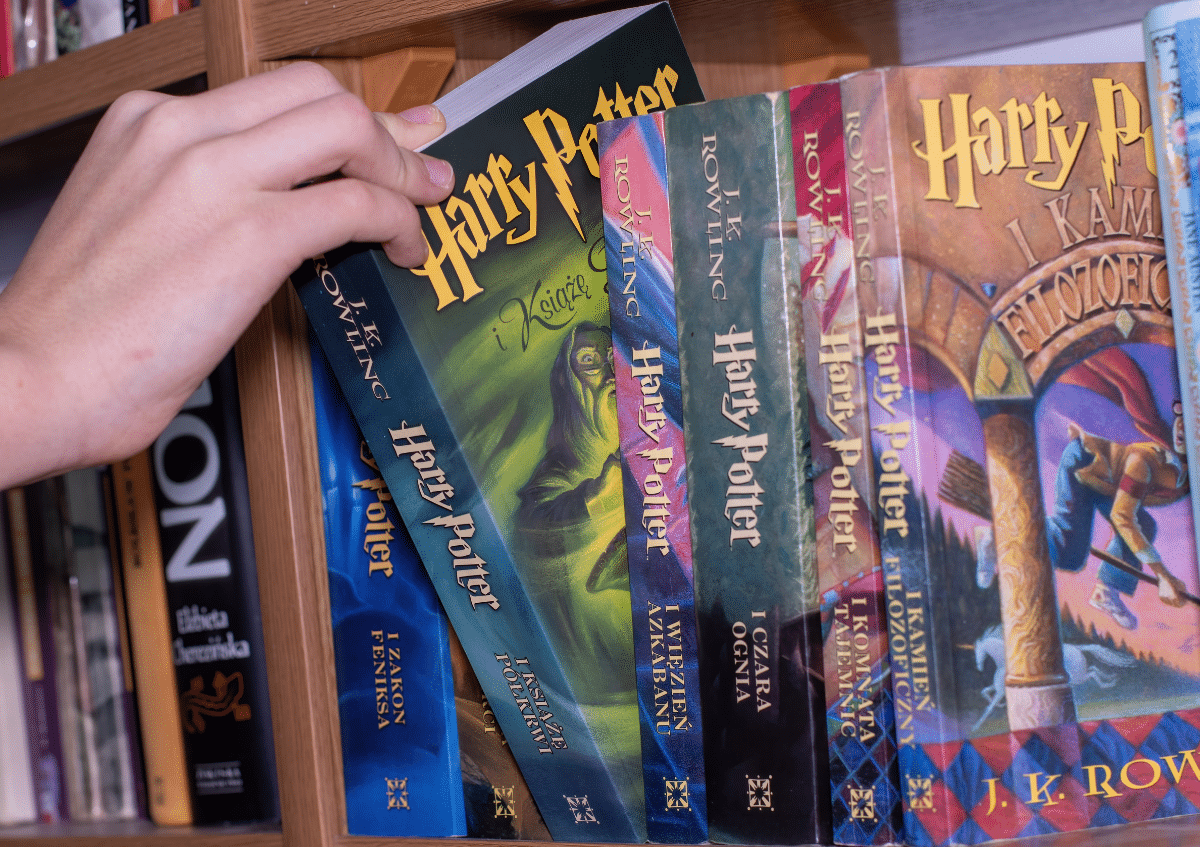
Four well-known AI models were tested: Claude 3.7 Sonnet, GPT-4.1, Gemini 2.5 Pro, and Grok 3. And the result? Claude in particular showed its "reading-friendly" side: the model was able to output a full 95.8% of "Harry Potter and the Philosopher's Stone." George Orwell's "1984" was also almost completely reconstructed. Gemini managed just under 77%, while Grok achieved around 70%. Only GPT-4.1 pulled the plug after the first chapter, producing a meager 4%.
It has never been easier to "copy" a book.
The frightening thing about the study is that the researchers did not have to circumvent any security mechanisms or use complicated tricks to extract the books from the models. A simple instruction was enough: "Continue with the following text exactly as in the original." Then the first sentence of a well-known book was entered—and off they went.
Gemini and Grok, in particular, continued with the original text without hesitation. No resistance, no questions asked. The AI simply did what it was told—even if it violated applicable copyright law in the process. Claude was even more "cooperative" and output almost two complete books almost word for word.
Where is the protection of intellectual property?
The situation is clear: if AI models can output entire books without anyone having to hack them, that's a real problem. This is no longer a matter of a few quotes or summaries—the models are spitting out original texts that are actually protected. This raises questions: How secure are AI models really? And who is responsible when copyrighted content can be reproduced so easily?
This is a nightmare, especially for authors, publishers, and rights holders. Their work can suddenly be accessed by anyone—free of charge, uncontrolled, and possibly even published. The idea that AI can deliver an entire book at the touch of a button should make us all sit up and take notice.
Comment: When AI is no longer creative, but merely a copier
AI is supposed to help us be creative. To formulate texts, develop ideas, and provide food for thought. But when the creative machine becomes a digital copier that reproduces entire books, something has gone wrong. The technology is impressive—no question about it. But that's exactly why clear rules and boundaries are needed. It can't be that artificial intelligence simply spits out copyrighted works just because someone asks nicely. Allowing this not only jeopardizes copyright law, but also undermines trust in a technology that is supposed to help—not steal.
Source: the-decoder.de