



Image: Anastasiia Sapozhnikova / shutterstock.com
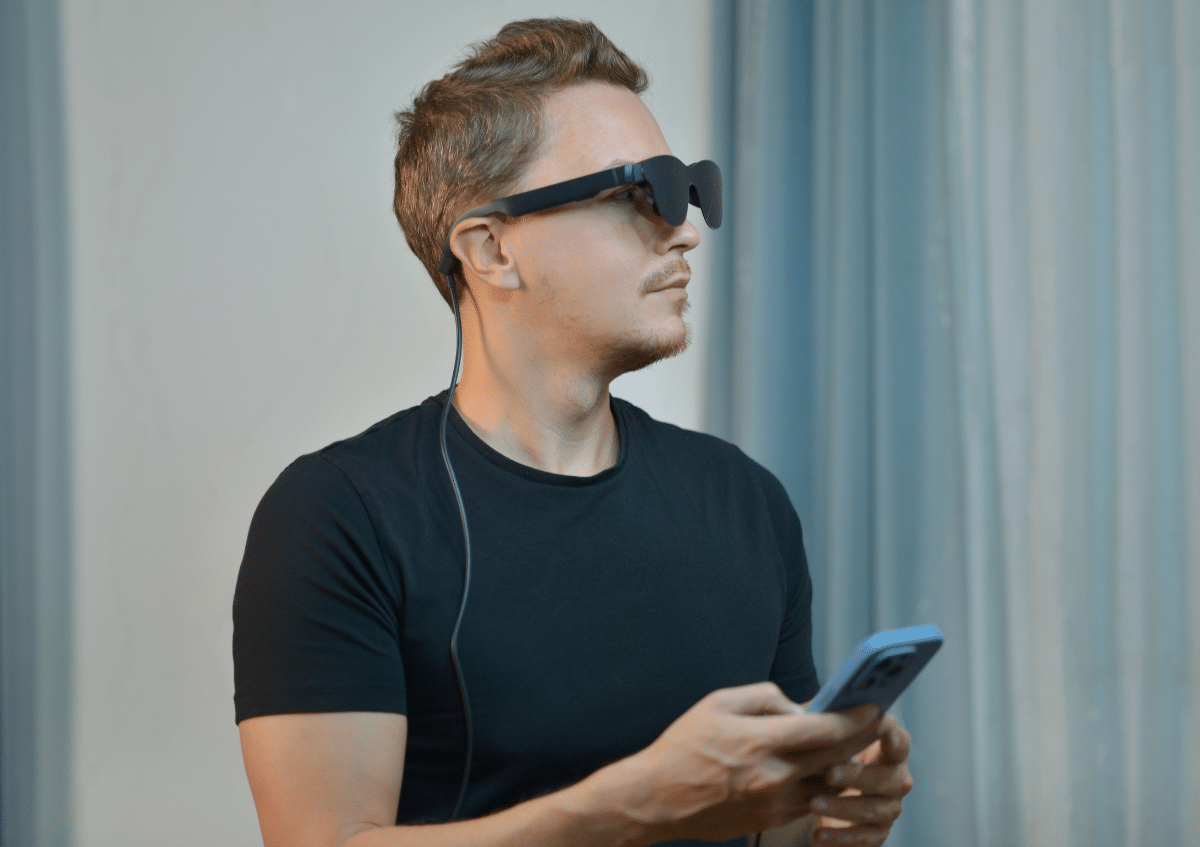
For years, Apple has been regarded as a company that places a high priority on data privacy. Yet, ironically, this very promise could become its greatest challenge when it comes to one of its most exciting future products. We’re talking about smart glasses that display information, understand voice commands, and are designed to make everyday life easier with the help of artificial intelligence.
The problem: The market has already been shaped by Meta—and there, smart glasses with cameras and microphones have been sparking heated debates for months. Secret recordings, privacy concerns, and fears of constant surveillance have shaken many people’s trust. It is precisely this image that could now catch up with Apple as well, even though its own products aren’t even on the market yet. Recent reports suggest that Apple is therefore even considering a version without a camera and postponing the market launch.
Why Smart Glasses Have Suddenly Become a Data Privacy Issue
At first glance, smart glasses seem like the next logical step after smartphones and smartwatches. They can provide navigation directions, read messages aloud, play music, or answer questions using AI—all without having to constantly take your phone out of your pocket.
But it is precisely this technology that raises new questions. If a pair of glasses is equipped with cameras and microphones, it is theoretically possible to film people or record conversations without outsiders immediately noticing. Even if the manufacturer includes visible indicators, such as small lights, many people still feel uneasy about it.
As a result, Meta’s smart glasses, in particular, have come under repeated criticism in recent months. Privacy advocates and experts have warned that such devices could blur the line between everyday life and constant surveillance. Although Meta responded with additional security measures, the public debate has long since been ignited.
Apple is facing a difficult decision
This puts Apple in an unusual situation. On the one hand, the company wants to enter a promising future market with its own smart glasses. On the other hand, a large part of its brand image is based on the promise to protect personal data as effectively as possible.
That is precisely why, according to consistent media reports, there is an internal debate about whether the first generation of Apple glasses should possibly do away with photo and video capabilities entirely. Instead, features such as voice control, navigation, music, phone calls, and AI support could take center stage.
However, such a move would also have its drawbacks. After all, many users consider the ability to take photos or videos on the fly to be one of the biggest advantages of modern smart glasses. Without these features, the product might appear more privacy-friendly, but at the same time, it could be less appealing to many buyers.
More Than Just Technology: It's About Trust
That's why the real issue isn't just about cameras or microphones. It's about trust.
Many people today wonder what data modern devices collect, how long it is stored, and who ultimately has access to it. Artificial intelligence, in particular, requires large amounts of data to provide the most accurate answers possible. This automatically creates a tension between convenience and privacy.
There’s also a social aspect to consider: Who wants to constantly have to wonder, while at a café, at the gym, or on public transportation, whether the person across from them is filming or just listening to music? This uncertainty changes how people behave in everyday life—regardless of whether anyone is actually recording or not.
For manufacturers, this means that good technology alone will no longer be enough in the future. It will be just as important to explain clearly what data is being processed and which protective measures actually work. Those who communicate credibly on this front could secure a decisive competitive advantage.
The future of smart glasses won't be decided solely in the tech lab
The race to develop smart glasses has long since begun. Apple, Meta, and other manufacturers are working on devices designed to transform everyday life. But success won’t be measured solely by processors, battery life, or artificial intelligence.
Equally important is the question of whether consumers trust such devices at all. As soon as people feel they could be watched at any time without their knowledge, the technology risks facing widespread rejection.
For companies, data protection will therefore no longer be just a legal issue, but a genuine competitive advantage. Those who credibly protect privacy could come out on top in the long run. Those who underestimate this issue, on the other hand, risk damage to their reputation that will be nearly impossible to repair. That is precisely why not only tech enthusiasts, but also data protection advocates and lawyers are watching these developments with great interest.
A critical look at the development
The most pressing question isn’t whether Apple builds the better smart glasses—but whether we, as a society, are even ready for such devices. Technology often evolves faster than our rules and our gut instincts. Of course, smart glasses can make everyday life easier. But no one wants to constantly wonder whether the person they’re talking to is actually having a conversation or secretly recording everything. Anyone who views data protection merely as a burdensome obligation will fail in the long run. Manufacturers should therefore focus less on how they can collect even more data, and more on how they can make people feel that their privacy is truly respected. Trust is more valuable today than any new AI feature—and that’s exactly what some tech companies still don’t seem to have fully grasped.